
Body Alignment: Why How You Hold Yourself Shapes How You Feel
By Palang Holistic · July 8, 2026 · 7 min read
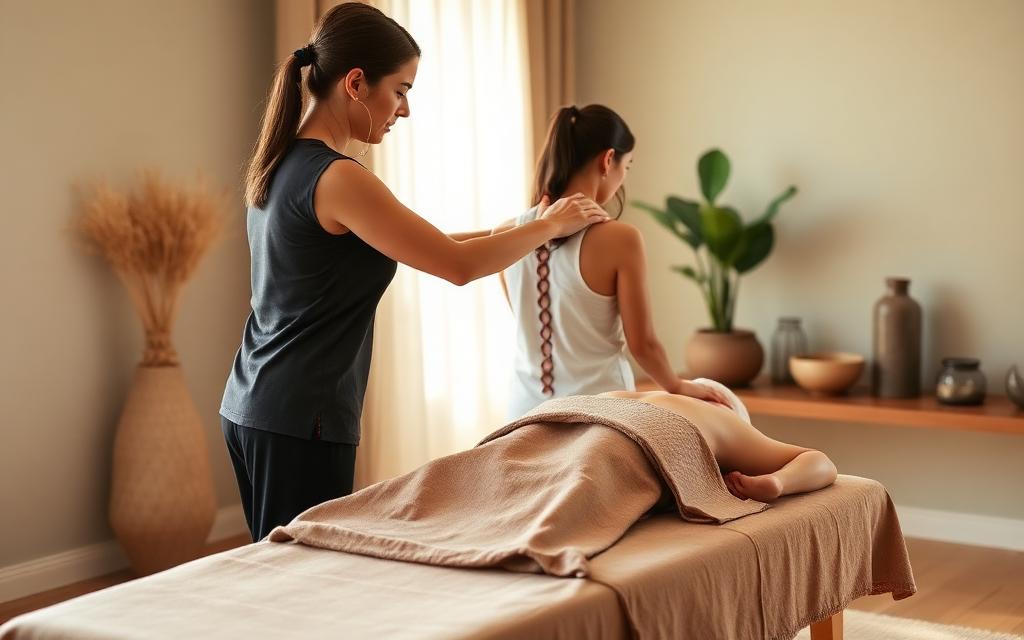
Alignment is one of those words we hear often but rarely stop to define. In the simplest terms, body alignment describes how your bones, joints, and soft tissues stack and relate to one another — how your head sits over your shoulders, how your shoulders sit over your hips, and how your weight travels down through your legs into the ground. When these relationships are balanced, movement feels effortless. When they drift out of balance, the body compensates, and those compensations are what we usually feel as stiffness, aching, or a body that just won't move the way it used to.
Modern life quietly pulls us out of alignment. Hours at a desk round the shoulders and push the head forward. Repetitive movements — or the absence of movement altogether — shorten some muscles and weaken others. Old injuries leave protective patterns behind long after the tissue has healed. None of these happen dramatically; they accumulate, degree by degree, until one day reaching overhead or turning to look behind you feels restricted.

Why does this matter beyond aesthetics? Because alignment is efficiency. When your structure is balanced, muscles share load the way they're designed to, joints glide through their full range, and your nervous system spends less energy holding you upright. Poor alignment does the opposite: certain muscles overwork to hold the body together, circulation and lymphatic flow slow in compressed areas, and force concentrates on joints that weren't meant to absorb it. Over months and years, that concentrated stress is what turns into chronic pain and lost mobility.
Rotation deserves special mention, because it's the plane of movement most training and daily life neglect. Twisting, turning, and reaching draw on the spine, hips, thoracic spine, and shoulders all working together. When any one of those links stiffens, power leaks and range shrinks — the golfer loses turn, the parent winces reaching into the back seat, the desk worker can't check a blind spot without moving the whole torso. Restoring rotation is often the fastest way to make a body feel younger.
This is where hands-on bodywork earns its place. Stretching alone can help, but persistent structural imbalance usually needs targeted manual work to release the deep restrictions holding a pattern in place — followed by active strengthening so the newly opened range actually holds. At Palang Holistic, our Bodywork Alignment program pairs a thorough assessment with a series of focused sessions to correct posture and release compensation patterns, while Unlock Your Rotation is built specifically around freeing the spine, hips, thoracic spine, and shoulders to move as one.
You don't need to be in pain to benefit from better alignment. Athletes use it to move with more power and less injury. Desk workers use it to undo the toll of sitting. Anyone recovering from an injury uses it to rebuild balanced movement instead of layering new compensations on top of old ones. Wherever you're starting from, the goal is the same: a body that stands taller, moves freer, and feels at ease in its own frame.
If you've been living with stiffness, restriction, or that sense of being locked up, alignment is a good place to begin. Book a Bodywork Alignment assessment and we'll map where your structure is compensating — and build a plan to bring it back into balance.